Your front door works hard every single day. It handles rain, wind, cold snaps, and the occasional forceful slam. At some point, it stops keeping up.
The tricky part? Most doors don’t fail all at once. They give you small signals first. A little sticking here. A cold draft there. A squeak that wasn’t there last winter. These things are easy to brush off, but ignoring them can turn a straightforward replacement into a much bigger problem.
At Harley Exteriors, we’ve completed over 21,000 installations across Washington state since 2002, and we’ve seen firsthand how small door issues snowball when left too long. If you’ve been wondering whether your door still has life in it, this guide will help you figure that out.
What Are the Signs My Front Door Needs Replacing?
Here are the seven most common signs we see in homes across the Pacific Northwest, along with what can happen if you wait.
Sign 1: Your Door Sticks, Scrapes, or Won’t Latch Properly
If you have to put your shoulder into opening or closing your door, that’s not just annoying. It’s a sign something has shifted.
What’s happening: Wood expands with moisture. Frames settle over time. In wet climates like Seattle, Everett, or Tacoma, doors absorb humidity year-round, which causes swelling and misalignment. According to a 2023 survey by the National Association of Home Builders (NAHB), 28% of U.S. homeowners list door sticking as a top maintenance issue, largely tied to humidity-related expansion.
What happens if you ignore it:
- The door frame takes on more stress every time you force it open or closed
- Latching problems become locking problems, which become security problems
- A 2023 Angi report found that delayed fixes can result in repair costs 2 to 3 times higher than addressing the issue early
A door that fights back every morning is telling you something. It’s worth listening to.
Sign 2: You Feel Drafts Around the Door (Even When It’s Closed)
Run your hand around the edges of your door on a cold day. Do you feel air sneaking through? That’s a problem that shows up on your energy bill every single month.
What’s happening: Weatherstripping wears out. Frames warp. Gaps form where the door meets the frame. These openings allow constant heat exchange, a process sometimes called thermal bridging.
According to the U.S. Department of Energy (DOE), inefficient doors contribute to 10 to 25% of a home’s heat loss. A 2024 study from Lawrence Berkeley National Laboratory found that doors older than 15 years fail insulation tests 40% more often than newer models.
For homeowners in Bellevue, Renton, or Bellingham, where winter lows regularly sit between 35 and 45°F, that gap in your door is working against your heating system around the clock.
What happens if you ignore it:
- Energy bills climb steadily without a clear cause
- Moisture from those drafts can work into walls and frames, leading to mold over time
- The EPA’s 2023 indoor air quality data estimates 1 in 5 Pacific Northwest homes are affected by moisture-related mold issues
If you’re not sure whether drafts are coming from your door or your windows, it may be worth getting a professional energy assessment to see the full picture.
Sign 3: You Can See Cracks, Soft Spots, or Rot
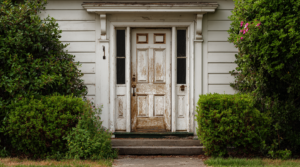
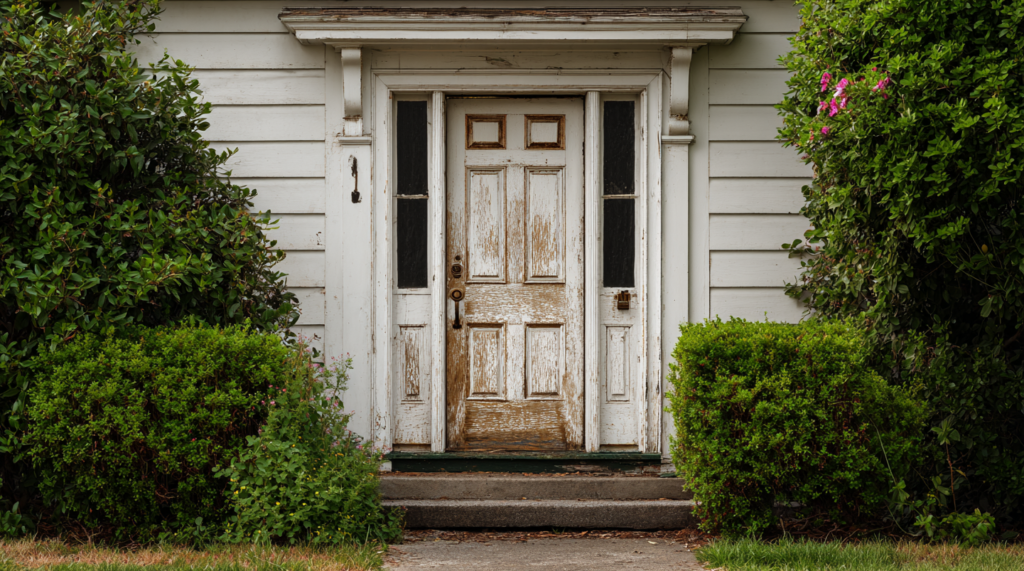
Visible damage is one of the easiest signs to spot and one of the easiest to put off. “It’s not that bad yet” is something we hear a lot. But visible rot or cracking tends to be worse than it looks.
What’s happening: Wood doors are especially vulnerable in rainy areas. NOAA’s 2024 climate data shows annual precipitation in areas like Seattle and Bremerton averaging 37 to 50 inches. That constant exposure softens wood, creates entry points for water, and weakens the structural integrity of the door itself.
According to a 2024 HomeAdvisor report, 35% of door replacements are driven specifically by visible rot or physical damage.
What happens if you ignore it:
- The FBI’s 2023 Uniform Crime Reporting data found that visible damage to entry points increases burglary risk by 25%
A crack you ignore today can become a rotted frame tomorrow.
Sign 4: The Door Is Warped or No Longer Sits Square in the Frame
A warped door looks slightly off. It might let in light around the edges. It may not close flush. In mild cases it’s barely noticeable, but the consequences add up.
What’s happening: A 2023 analysis by the International Code Council (ICC) found warping affects 22% of older doors in humid U.S. regions. Washington’s coastal communities, such as Bellingham and Anacortes, see particularly high rates thanks to average humidity levels between 70 and 80% (Weather Underground, 2024).
What happens if you ignore it:
- The frame around the door continues to deteriorate
- Security gaps open up that locks can’t fully compensate for
- According to Realtor.com’s 2024 home improvement data, unaddressed warping can reduce home value by 5 to 10%
If your door doesn’t sit right in its frame, the issue is rarely just cosmetic. A professional can assess whether the door, the frame, or both need to be addressed.
Sign 5: Your Locks Are Hard to Use or Your Door Has Security Gaps
A door that looks fine but doesn’t lock smoothly is a security liability. This one is especially easy to overlook because the door technically still “works.”
What’s happening: Older hardware wears down. Locks that once turned easily start requiring two hands and a specific technique. Frames shift, leaving micro-gaps that reduce how effectively a deadbolt actually engages.
The Insurance Information Institute (III) reported in 2024 that 34% of burglaries involve front doors, with faulty locks contributing in 40% of those cases. For homeowners in areas like Kent or Federal Way, where FBI 2023 data shows property crime rates trending upward, this is worth taking seriously.
What happens if you ignore it:
- The door becomes easier to force open
- Average losses per residential break-in were reported at $2,600 per incident by the III in 2023
- Outdated hardware often can’t be upgraded without replacing the door itself
A door that’s hard to lock is one that isn’t reliably locked.
Sign 6: Condensation or Frost Forms on the Inside of the Door
This one surprises a lot of homeowners. If you’re seeing moisture or frost on the interior surface of your door during cold months, that’s not just a weather thing. It’s an insulation problem.
What’s happening: Older doors lack the foam insulation cores and thermal break technology found in modern replacements. When the door’s surface temperature drops too far, warm interior air condenses against it. This is common during Washington winters and often gets worse each year as insulation degrades.
Contractor guides published in January 2026 specifically flag condensation and interior frost as clear signs that a door has reached the end of its functional life.
What happens if you ignore it:
- Condensation runs down the door and pools at the base, accelerating rot and frame damage
- Persistent moisture near the door opening increases mold risk
- Comfort near the entryway suffers, especially in rooms where the door is the primary exterior wall opening
If you’re regularly wiping down your door in the morning, it’s time to have someone take a look.
Sign 7: The Door Is 20 or More Years Old
Sometimes a door doesn’t show dramatic visible signs of failure. It just quietly becomes less effective over time. Age alone is a meaningful factor.
What’s happening: ENERGY STAR’s 2024 certifications show that doors older than 20 years carry roughly 30% lower efficiency ratings than current models. The U.S. Census Bureau’s 2023 housing data found that approximately 45% of Washington homes, including many in older neighborhoods like Shoreline, were built before 2000.
Those doors were built to the standards of their time. Those standards have changed significantly.
What happens if you ignore it:
- Utility costs increase steadily as insulation degrades
- Older doors often can’t meet current Washington State Energy Code standards when a permitted replacement is eventually required
- According to Zillow’s 2024 research, aging doors reduce property value by 3 to 7% and increase utility costs over time
ENERGY STAR data suggests that replacing an old, inefficient exterior door with a certified model can reduce heating and cooling costs by up to 13% compared to older non-certified units. Actual savings depend on your home, climate, and current conditions, so it’s worth speaking with a professional for a real-world estimate.
What Happens When You Keep Putting It Off?
The honest answer: things get more expensive.
A sticking door becomes a damaged frame. A small crack lets in moisture that reaches the surrounding wall. A draft that spikes your energy bill by a modest amount in year one costs more in year five when the weatherstripping has fully failed and the insulation is compromised.
Here’s a quick breakdown of what delayed replacement typically leads to:
| Warning Sign | Short-Term Impact | Long-Term Consequence |
| Sticking/jamming | Inconvenience, latching issues | Frame damage, security gaps |
| Drafts | Higher energy bills | Moisture intrusion, mold |
| Cracks/rot | Cosmetic damage | Structural failure, pest entry |
| Warping | Alignment issues | Frame deterioration, home value loss |
| Faulty locks | Security risk | Increased break-in vulnerability |
| Condensation | Morning moisture | Base rot, recurring frame damage |
| Age 20+ years | Reduced efficiency | Ongoing utility cost increase |
Is It Time to Talk to Someone?
If two or more of the signs above sound familiar, it’s worth getting a professional set of eyes on your door before the issue gets bigger.
At Harley Exteriors, we serve homeowners across Washington state, including Auburn, Bellevue, Everett, Bothell, Federal Way, Bellingham, Bremerton, Kirkland, Renton, Seattle, Tacoma, and dozens of surrounding communities. We’ve been helping families make this call since 2002, and we’re not here to push a replacement you don’t need.
If you’re noticing drafts, damage, or poor performance, you can explore what window replacement in Bothell, WA looks like as part of a full exterior assessment, since doors and windows often fail around the same time in older homes.
How Long Should a Door Actually Last?
Most exterior doors, when properly installed and maintained, last between 20 and 30 years. Factors that shorten that lifespan include:
- Direct sun and UV exposure on south-facing entries
- Heavy rain and wind (especially relevant on the Washington coast)
- High-traffic use in family homes
- Original installation quality
If your door is past the 20-year mark, it’s not a question of if it will need replacing, but when. Getting ahead of that decision gives you time to choose the right product rather than making a rushed call after something fails.
Can’t I Just Repair It Instead?
Sometimes, yes. A hinge adjustment, fresh weatherstripping, or a new lock set can extend a door’s life if the door itself is still structurally sound. But repair makes sense only when:
- The door frame is solid with no rot
- The door panel isn’t warped or cracked
- The issue is a single, isolated component
When multiple problems exist at the same time, repairs tend to buy months rather than years. And in cases where moisture has reached the frame or structural core, repairs often mask the problem without solving it. A professional assessment is the best way to know which situation you’re in.
Harley Exteriors: A Quick Word From Us
We’re a family-owned window replacement company in Redmond, WA, and we’ve been serving homeowners across Washington since 2002. Over 21,000 installations later, the homeowners who reach out to us are usually the ones who’ve been sitting on a concern for a while and finally want a straight answer.
We don’t do pressure tactics. We do honest assessments, quality installations, and work that holds up in Pacific Northwest conditions, because that’s what we’d want for our own homes.
If your door has been giving you trouble, we’re happy to take a look and tell you what we actually see.
Still Have Questions? Here’s What We Hear Most Often
How do I know if my door needs replacing or just repairing? If you’re dealing with a single isolated issue like a worn hinge or compressed weatherstripping, repair is often the right first step. When you’re seeing multiple signs at once (drafts plus sticking plus visible damage, for example), or when the door is 20+ years old, replacement typically makes more sense financially. A professional can help you assess which path fits your situation.
What makes Pacific Northwest homes more vulnerable to door failure? Washington’s climate combines high humidity, significant rainfall (37 to 50 inches annually in many areas), and temperature fluctuations that cause wood to expand and contract repeatedly. This accelerates warping, rot, and weatherstripping wear faster than in drier climates.
Does a new door actually lower energy bills? According to ENERGY STAR’s 2024 data, replacing an old inefficient exterior door with a certified model can reduce nationwide heating and cooling costs by an average of up to 13% compared to older non-certified units. Actual results depend on your home’s specific conditions, orientation, and climate. We recommend speaking with a professional for a realistic estimate specific to your home.
Will replacing my door increase my home’s value? Zillow’s 2024 research indicates aging doors reduce property value by 3 to 7%. A new door improves curb appeal, security, and efficiency, all of which buyers factor into offers. The exact return depends on the product, the market, and the overall condition of the home.
Do I need a permit to replace a door in Washington state? Permit requirements vary by city and county. In many Washington jurisdictions, a straight replacement that matches the existing opening doesn’t require a permit, but expanding or modifying the opening typically does. We recommend checking with your local building department or asking your installer. Harley Exteriors works with homeowners across Washington and can help guide you through what’s required in your area.
How long does a door replacement take? Most standard exterior door replacements are completed in a single day. Larger or more complex installations may take longer. During your consultation, we can give you a realistic timeline based on your specific door and entry configuration.
Is window replacement something I should consider at the same time? If your home has older windows and an aging door, it’s worth evaluating both together. Drafts and efficiency problems rarely come from just one source. You can learn more about door and window replacement services from Harley Exteriors to see what a combined assessment looks like.