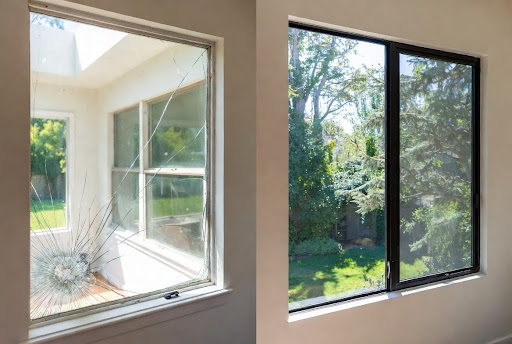
‘That crack running across your window glass is hard to ignore. Maybe it showed up after a cold snap, a stray ball, or just one too many years of Pacific Northwest rain and wind. And now you’re staring at it wondering: Can this be fixed, or is it time for a full replacement?
It’s a fair question, and the answer isn’t always obvious. At Harley Exteriors, we’ve assessed thousands of windows across the Seattle area since 2002, and we’ve seen firsthand how a small crack can mean very different things depending on where it is, how deep it goes, and what’s happening with the rest of the window. Getting this call wrong either direction costs you money.
This guide breaks down exactly what professionals look at when making that decision, so you know what to expect before anyone even shows up at your door. If you’re already leaning toward replacement and want to know what that looks like, you can start by learning more about working with a trusted window company in Bothell, WA.
The 3-Inch Rule: A Starting Point, Not the Whole Story
Here’s the first thing most window professionals check: the length and location of the crack.
Cracks under 3 inches long that haven’t spread to the corners or edges, and that don’t cut through the frame or affect structural integrity, may allow for a professional resin seal in certain single-pane cases. That’s a narrow set of conditions. The moment any of these factors shifts, the calculus changes quickly.
A crack likely requires full window replacement when:
- It’s longer than 3 inches
- It’s spreading toward the corner or edge of the glass
- It runs deep enough to affect structural strength
- It’s in a double-pane unit (more on that below)
- It’s accompanied by frame damage or seal failure
A short crack in the middle of single-pane glass is a different problem than a long crack curling toward the frame. Location matters just as much as length.
Double-Pane Windows: Why Fogging Means More Than You Think
If your cracked window is also foggy or showing moisture between the panes, that’s a different conversation entirely.
Fogging between panes signals seal failure. Double-pane windows are filled with insulating gas (typically argon). When the seal breaks, that gas escapes and moisture gets in. Once that happens, no resealing fix will restore the original performance. The National Fenestration Rating Council (NFRC) notes that when water leakage, broken components, or failed seals are present, widespread problems like these call for full replacement, not patching.
Leaving a fogged, failed double-pane window in place creates real downstream problems:
- Ongoing energy loss from reduced insulation
- Mold risk from trapped moisture
- Further frame damage as water continues to work its way in
The U.S. Department of Energy reports that windows account for 25 to 30% of residential heating and cooling energy use. A failed double-pane window is actively working against your energy bills every month it stays in place.
What the Frame Is Telling You
Glass doesn’t fail in isolation. Before recommending repair or replacement, we always look at the frame condition. This step gets skipped more often than it should.
Signs the frame is part of the problem:
- Visible rot, warping, or soft spots in wood frames
- Rust or corrosion on metal frames
- Water stains or damage beyond a single localized spot
- Difficulty opening or closing the window
- Drafts coming through even when the window is fully shut
If the frame is compromised, sealing the glass won’t stop air and water from getting in through the frame itself. The NFRC’s guidance is clear on this: when jammed sashes, broken components, or persistent leaks are present alongside cracks, replacement is the durable answer.
Think of it this way: A repair that has to be redone every couple of years isn’t a repair. It’s a slow path to the same replacement, just with extra steps and extra cost along the way.
When Is a Crack Actually a Safety Hazard?
This is the question a lot of homeowners quietly wonder about but don’t always ask directly.
A cracked window becomes a safety concern when:
- The glass has structural cracks that could cause it to fail unexpectedly
- It’s in a location classified as hazardous (near a door, low to the ground, or in a high-traffic area)
- The crack is in a load-bearing sash or compromises the window’s ability to close and latch securely
Washington State building code requires safety glazing in hazardous locations. If you’re replacing glazing near a door or in a low window, those requirements apply regardless of what was there before. A licensed professional will walk you through what’s required in your specific situation.
Washington State Code: What Changes When You Replace
This matters more than most homeowners realize, and it’s worth understanding before you commit to a replacement project.
Under the 2021 Washington State Energy Code (WSEC-R), which became effective in March 2024, full window replacements must meet current residential energy efficiency standards. If you’re replacing the entire unit (frame, sash, and glass), new windows generally need to meet a U-factor of 0.30 or lower in most Washington climate zones.
Glazing-only swaps may be exempt in some cases, but a complete unit replacement triggers code compliance requirements. This isn’t a bureaucratic formality. It’s actually good news for you as a homeowner, because it means any replacement you invest in is required to perform to a modern efficiency standard.
Also worth knowing: Local utilities including Puget Sound Energy and Snohomish County PUD have offered rebate programs in 2025 and 2026 for qualifying energy-efficient window replacements. Availability and amounts change, so verify current offerings directly with your provider before your project starts.
The Energy and Cost Picture Over Time
Even when repair technically seems possible, the long-term math often points toward replacement.
ENERGY STAR program data shows that replacing single-pane windows with certified models lowers household energy bills by an average of up to 13% nationwide. In Western Washington’s mixed climate, triple-pane or low-E options tend to perform best.
From a resale standpoint, the 2024 Remodeling Report found that vinyl window replacements recoup approximately 67% of project cost at resale. That’s a meaningful return, especially in a market like greater Seattle where buyers pay attention to energy efficiency.
According to Future Market Insights (March 2026), energy-efficient window replacement is projected to drive 64.1% of U.S. residential window market revenue in 2026, driven by tightening building codes and growing homeowner demand for efficiency. This isn’t a passing trend.
A Quick Reference: Repair vs. Replacement
| Situation | Likely Outcome |
| Crack under 3 inches, not near edges, single-pane | May allow professional resin seal (evaluate on-site) |
| Crack over 3 inches or spreading to corners/frame | Full replacement needed |
| Fogging or condensation between panes | Full replacement needed |
| Drafts or leaks when window is closed | Full replacement needed |
| Frame rot, warping, or water damage | Full replacement needed |
| Repeated repairs that keep failing | Full replacement needed |
| Crack in hazardous glazing location | Replacement with safety glazing required |
Every situation still needs an on-site look. This table reflects general professional guidance, not a remote diagnosis.
What to Ask a Window Professional Before You Commit
Knowing the right questions helps you make a confident decision, not just take someone’s word for it.
Ask the professional these things:
- Is the crack structurally compromising the sash or frame?
- Is there any sign of seal failure or moisture between panes?
- Does the frame have damage beyond the glass itself?
- Would a repair here hold for more than a couple of years realistically?
- Does a full replacement here need to meet current Washington energy code?
- Are there rebates available through my utility for this type of replacement?
A straightforward answer to each of these will tell you a lot about whether you’re working with someone who actually assessed your window versus someone running through a script.
At Harley Exteriors, we’ve completed over 21,000 installations across the Puget Sound region since 2002. When we look at a cracked window, we’re factoring in all of these elements, not just the glass.
If you’re unsure about what you’re looking at, getting a professional opinion from a qualified window replacement company in Tacoma, WA is the most reliable next step before spending money on either option.
Making the Call: What We’ve Seen Work
Repair holds when conditions are genuinely narrow: small single-pane crack, no frame damage, no operational issues, no seal failure. That’s a specific situation.
Replacement makes sense in most other cases because patching a window that has underlying problems doesn’t address the root issue. It delays it. And in a climate like Western Washington’s, where rain, temperature swings, and humidity are ongoing, a compromised window tends to get worse, not better.
The good news: a properly installed, code-compliant replacement window with the right U-factor for your climate zone is designed to handle Pacific Northwest conditions for decades. That’s a different value conversation than duct-taping over a problem.
Don’t Guess. Get a Professional Assessment Instead.
If you’ve got a cracked window and you’re weighing your options, the most useful thing you can do is have it looked at in person. There’s no substitute for someone who can see the crack, check the frame, assess the seal, and give you an honest recommendation.
Harley Exteriors provides professional door replacement in Auburn WA and serves homeowners across Bellevue, Bothell, Bellingham, Bremerton, Everett, Federal Way, Issaquah, Kent, Kirkland, Redmond, Renton, Seattle, Tacoma, Puyallup, and communities throughout the Puget Sound and surrounding counties. We’re happy to take a look and walk you through exactly what’s going on with your window, with no pressure and no guesswork.
Reach out to Harley Exteriors to schedule a consultation and get a clear answer on whether your cracked window needs repair, replacement, or something else entirely.
Frequently Asked Questions
Can a cracked window be repaired instead of replaced? In some cases involving small cracks (under 3 inches) in single-pane glass with no frame or seal issues, a professional resin seal may be an option. However, most cracks, especially in double-pane units or windows with frame damage, require full replacement to restore safety and performance. Every situation needs an on-site evaluation to determine the right answer.
How do I know if my cracked window is a safety hazard? If the crack compromises the window’s structural integrity, if it’s in a hazardous location (near a door or low to the floor), or if the window can no longer close and latch securely, it’s a safety concern. Washington State code requires safety glazing in certain locations, so if you’re replacing in those areas, the new glass must meet those standards.
Why is my double-pane window foggy after it cracked? Fogging between panes indicates the sealed insulating gas has escaped and moisture has entered the space between the glass layers. This is a seal failure. Once this happens, resealing typically won’t restore the original performance. The NFRC recommends full replacement when this type of widespread failure is present.
Does replacing a window in Washington State require a permit or code compliance? Full window replacements (frame, sash, and glass) in Washington must generally meet the 2021 Washington State Energy Code requirements, including U-factor standards of 0.30 or lower in most climate zones. Glazing-only swaps may be exempt in some scenarios. A licensed professional can confirm what applies to your specific project.
Will replacing my windows actually lower my energy bills? According to ENERGY STAR program data, replacing single-pane windows with certified models can reduce household energy bills by an average of up to 13% nationwide. In Western Washington’s climate, low-E or triple-pane options typically deliver the best efficiency gains. Local utility rebates through providers like Puget Sound Energy or Snohomish County PUD may also be available, though you’ll want to verify current offerings directly.
How much of the replacement cost can I expect to recoup if I sell my home? The 2024 Remodeling Report data found that vinyl window replacements recoup approximately 67% of project cost at resale. In a market where buyers increasingly prioritize energy efficiency, updated windows are a visible and meaningful upgrade.
How do I find a reliable window replacement company near me in the Seattle area? Look for a licensed, experienced company with a verifiable local track record. Ask about code compliance, product certifications (ENERGY STAR, NFRC labels), and whether they handle the full installation including proper flashing and sealing. Harley Exteriors has served homeowners across the greater Seattle and Puget Sound region since 2002, with over 21,000 completed installations.